
Tigerbook New ID
Tigerbook and the Tiger Family Tree
The tiger is India’s national animal and this market’s favourite mascot — which is how players end up staring at Tigerbook, Tiger Exchange and Tigerexch247 wondering whether they are one operation, cousins, or complete strangers. This page is the disambiguation guide: what Tigerbook is, how it relates to its stripey neighbours, and how to keep tiger-named boards straight in practice. GameWinExch issues Tigerbook new IDs over WhatsApp with rupee deposits, and we issue for the other tigers too — so we have no reason to blur the distinctions.
Meet the Tigers
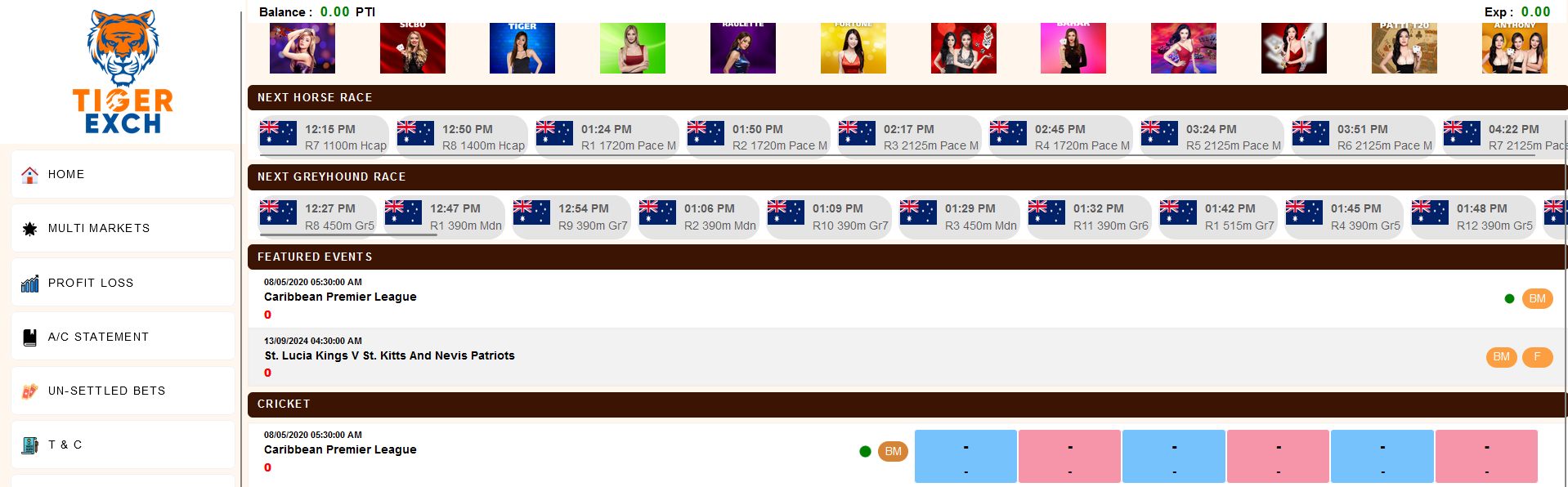
Tigerbook, this page’s subject, is a book-style panel: cricket match odds and sessions, main football markets, casino tables, one rupee wallet. Tiger Exchange leads with the two-sided exchange format — back and lay across its cricket menu. Tigerexch247 wears the always-on suffix, pitching round-the-clock service. Shared mascot, distinct boards: separate logins, separate wallets, and service characters of their own. Treat each as its own relationship, because operationally that is what it is.
Why Mascots Multiply
- Strong symbols get mined: a name that signals power and Indian identity in one word will be reused until the niche is saturated — exactly as lions, kings and sevens have been.
- White-label economics: launching a board is cheap, so successful themes spawn variations fast, as the group-operator page explains.
- Players remember animals: “the tiger one” survives in memory where a made-up word wouldn’t — which is precisely why precision matters when several boards answer to it.
- Imitators follow attention: popular mascots attract lookalike domains; the exact-address habits are your defence.
Choosing Your Tiger
Format first: want to lay as well as back, trade positions, and read order books? The exchange tigers fit. Prefer straightforward odds-and-slip betting with a casino alongside? Tigerbook’s book format is the simpler home. Then service details: ask the GameWinExch chat for each board’s current minimums, withdrawal windows and market menu, in writing, and run the first-week audit on whichever you join. Some players keep one book and one exchange tiger deliberately — the two formats complement each other, per the line-shopping setup.
The Bookkeeping That Tames the Stripes
Whatever subset of the family you join, keep the records separated from day one: a note per board with its exact URL, join date and terms; distinct passwords; and per-board monthly reviews rather than a mental blur of “tiger money”. Confusion between similarly named boards is not a rare mishap — it is the default outcome without notes, and it turns simple support requests into archaeology. Five minutes of setup per board keeps every tiger in its own enclosure.
Book Format vs Exchange Format: the Decision in Detail
Since the tiger family splits precisely along this line, the format choice deserves full treatment. Book-style boards like Tigerbook quote you a price and take your bet against the house: simpler screens, guaranteed matching at the quoted odds, richer side-market menus, and margins baked into every price. Exchange-style boards match you against other players: tighter main-market pricing, the lay side and trading exits, but liquidity dependence — your bet fills only where money waits — and commission on winnings. The decision tree: if your betting is pre-match singles and the occasional side market, the book’s simplicity costs little and its guaranteed fills remove a whole class of friction. If you bet main markets at volume, want exits, or trade live, the exchange’s price advantage compounds into real money, per the margin arithmetic. And if you are genuinely unsure, the answer is the two-board test: small stakes on one of each for a month, ledger tagged by format, and the rows will vote. Most players discover they are temperamentally one or the other within twenty bets.
The Mascot Trap in Search and Social
Animal-branded boards dominate one specific risk surface: search-and-social impersonation. Because “tiger betting ID” is how memory stores the brand, players search exactly that phrase — and search results, social ads and Telegram handles for popular mascots are contested territory where impostors buy their way above the genuine article. The tiger-specific drills: never search your way to any tiger board — bookmarks only, issued in the chat; treat social-media accounts bearing the mascot as unverified marketing until the issuer confirms which, if any, are official; and be doubly suspicious of urgency messages wearing the mascot (“Tigerbook closing old IDs this week — migrate now”) — brand urgency plus a link is the phishing formula in its purest form, as the account-keys page details. The mascot makes the brand memorable to you and addressable to attackers in the same stroke. The bookmark habit breaks the attacker’s half of that bargain completely.
Holding a Family Portfolio Without the Blur
For players who do end up on two or three tiger boards, the anti-blur system is short and non-negotiable. Naming: in every note, ledger row and support message, the full board name — never “tiger”, which your own records will fail to disambiguate a season later. Wallet doctrine: each board’s balance has a job (home bankroll, trading float, occasional-market pocket) and money moves between jobs through your bank, not mentally. Review structure: the monthly rollup runs per board first, then combined — the per-board pass is where a deteriorating sibling shows itself before the family total hides it. And a single annual question: does each board still earn its seat? Portfolios accrete by default; the yearly cut — consolidating two underused siblings into one — is what keeps the setup an instrument rather than a drawer of old keys. Families are fine to hold. Blur is the only real cost, and it is entirely optional.
Frequently Asked Questions
How do I get a Tigerbook new ID?
Message GameWinExch on WhatsApp, deposit in rupees by UPI or bank transfer, and your login arrives in the same chat within minutes.
Is Tigerbook the same company as Tiger Exchange?
Treat them as separate boards with separate wallets. Whatever their backstage arrangements, your accounts and money are board-specific.
Which tiger board is best for beginners?
Book format is the gentler start; exchange format pays off once you want lay bets and trading. Tell the chat how you play and we will advise honestly.
Can I hold IDs on all the tiger boards?
Yes — one ID per board, with separate credentials and records as above.
Betting involves financial risk and is habit-forming. 18+ only. Many tigers, one discipline — exact addresses, tested withdrawals, written limits, and stakes you can afford to lose.